How to reconstitute peptides
By The PepVise Editorial Team · Reviewed April 21, 2026 · 10 min read
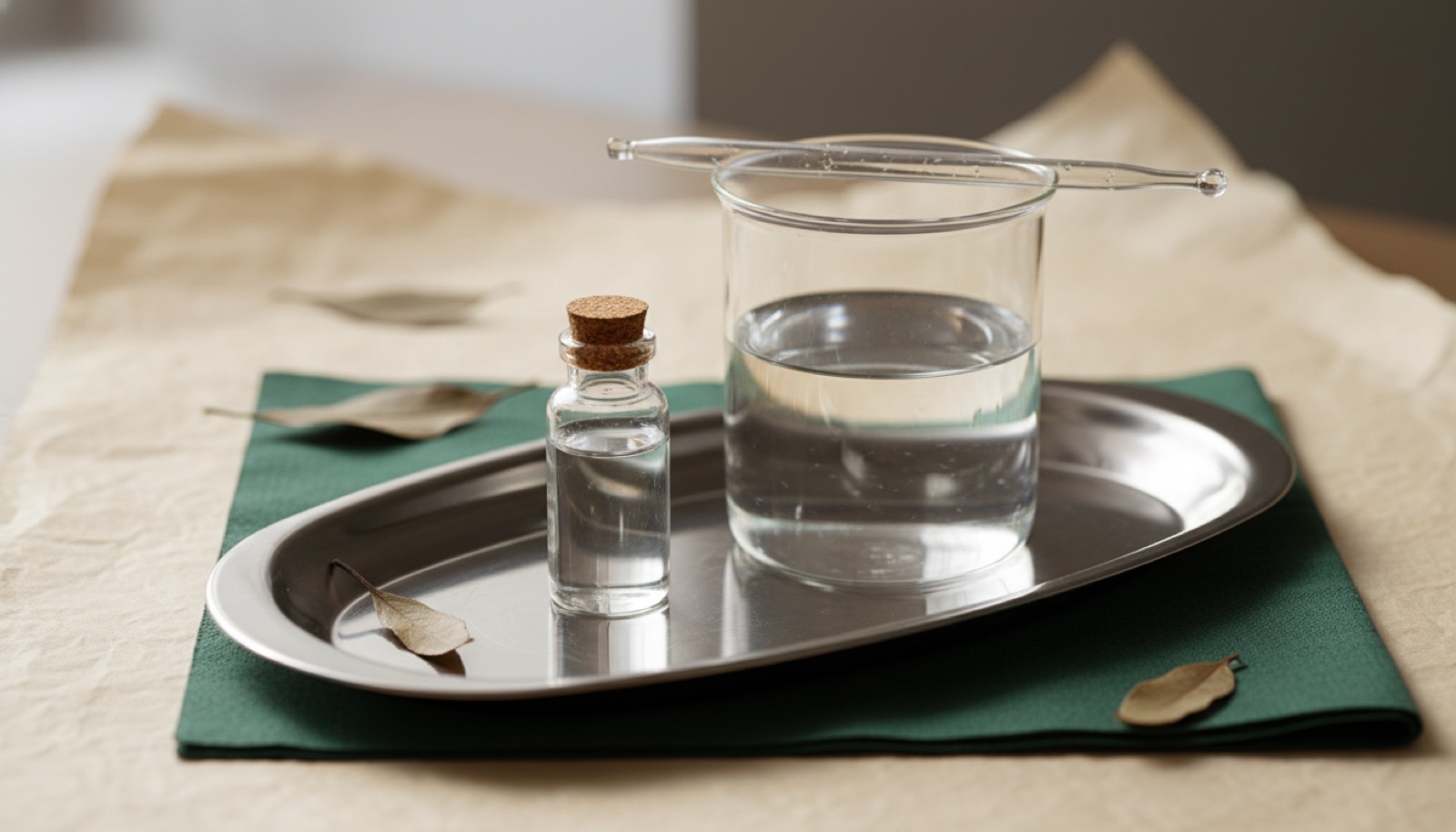
Step-numbered reconstitution procedure with research-context framing. Pairs with InjectCompass's patient-education version.
We describe what has been measured — by whom, at what scale, with what effect size, and with what caveats. Hedging, here, is honesty.
USP General Chapter <797> on Pharmaceutical Compounding, Sterile Preparations
The USP <797> framework is the standards document that licensed pharmacies follow for sterile reconstitution. It is not a home-use guide, and we are not recommending home reconstitution as a practice. We cite USP <797> because it defines what 'correct' looks like, and any actual peptide administration should be happening under a workflow at least inspired by those standards, which is almost always a licensed pharmacy's workflow, not a kitchen counter.
The texts we read alongside the papers.
- 01Standards reference
USP General Chapter <797>, Sterile Compounding Standards
The authoritative US standard for sterile preparation. Published by the United States Pharmacopeia. Behind a paywall for the full text, but publicly summarized in multiple FDA and board-of-pharmacy guidance documents. The background we reference when we talk about what 'properly reconstituted' means.
- 02Digital tool
PepVise Peptide Reconstitution Calculator (internal)
Our research-context calculator, takes peptide mass and bacteriostatic-water volume, returns concentration and volume-per-unit-dose from a published protocol. Client-side, unit-tested math, no data retention. The companion to this guide.
- 03Lab equipment
Consumer-grade microgram scales (for research context only)
Readers researching the reconstitution literature frequently ask about mass verification. Laboratory-grade microgram balances exist for research workflows; no consumer kitchen scale is suitable for sub-milligram precision. This is a capability question, not a product endorsement, and nothing in this section implies research-chemical reconstitution is appropriate outside a licensed setting.
- 04Pharmaceutical reference
USP-grade bacteriostatic water (licensed pharmacy source)
Bacteriostatic water for injection is a USP-monographed product: sterile water with 0.9% benzyl alcohol as a preservative. It is a prescription product in the US, sourced through licensed pharmacies. Research-chemical channel 'bac water' of uncertain provenance is a recurring purity concern flagged in the literature on counterfeit injectables.
How we read the literature
- Evidence tier
- We grade the literature on four tiers, High (replicated RCTs or meta-analyses), Moderate (multiple trials with mixed findings), Low (a single pilot or case series), and Anecdotal (preclinical only, no human data). The tier appears on every compound profile beside the claim it supports.
- Trial stage
- Where a compound sits in the human development pipeline is recorded as Preclinical, Phase 1, Phase 2, or Phase 3+. We pull the current stage from ClinicalTrials.gov and the EU Clinical Trials Register on access date and re-verify quarterly.
- Regulatory status
- We state the FDA posture plainly, approved for indication X, or labeled for research use only, or removed from the 503A list, or investigational under a specific IND. Regulatory status changes; every post carries a review date.
- Where we're uncertain
- Every compound profile closes with a named uncertainty section, the question we can't answer from the current literature, the trial we'd want to see, the effect size we'd treat as a real signal. Uncertainty is not a failure mode here; it's load-bearing.
The questions readers actually bring us.
- Is PepVise telling me to reconstitute peptides at home?
- No. This guide describes the reconstitution procedure as it appears in published research protocols and as it is performed in licensed compounding pharmacies. It is an educational reference, not an instruction to replicate it outside a licensed setting. Any actual peptide administration should be through a licensed physician operating within FDA-compliant pathways, which typically means a 503A compounding pharmacy dispensing a properly reconstituted preparation. The procedure is described here because understanding it is part of being a calibrated reader of the literature.
- What is the difference between bacteriostatic water and sterile water?
- Bacteriostatic water contains 0.9% benzyl alcohol, which inhibits microbial growth and allows a reconstituted vial to be used over multiple days. Sterile water for injection has no preservative and is intended for single-use. Published peptide protocols that use a multi-day reconstituted vial almost always specify bacteriostatic water. Both are USP-monographed prescription products in the US, sourced through licensed pharmacies, not through research-chemical suppliers.
- Why does shaking a peptide vial matter?
- Peptides are held in their active conformation by relatively weak hydrogen bonds and hydrophobic interactions. Vigorous shaking introduces air-water interfaces that preferentially denature the peptide at the foam surface, reducing the concentration of correctly folded material. Gentle swirling dissolves the lyophilized pellet without that damage. This is standard laboratory technique, the instruction is in every published peptide reconstitution protocol.
- How accurate does my volume measurement need to be?
- Accuracy depends on the concentration and the target dose from the published protocol. At typical research-peptide concentrations, a low-dead-space insulin syringe with clear gradation markings gets within a few microliters, which is usually sufficient. Volumetric pipettes achieve higher precision and are standard in lab work. The larger practical error is not measurement precision but mismatches between the intended concentration and the actual concentration if the starting material's potency is uncertain.
- Can I trust a vendor's Certificate of Analysis?
- COAs vary in rigor. Third-party independent testing (HPLC purity, mass spectrometry identity confirmation) from an accredited lab is the gold standard; vendor-generated COAs without independent verification are lower-quality evidence. The counterfeit-peptide literature documents repeated findings of material that did not match its label. If the workflow matters, the COA chain matters, and a vendor-only COA without independent assay is a known risk factor.
A Phase 2 randomized trial with blinded outcome assessment would change the reading. A new independent replication outside the currently dominant research group would change the reading. A regulatory action — approval, restriction, or a class warning — would change the reading. When any of those lands, we update this profile within a week and mark what changed.
References cited on this page.
PubMed, ClinicalTrials.gov, and FDA documents only. Secondary sources appear when needed to characterize public discourse, never as a source for a clinical claim.
- [01]USP General Chapter <797>, Pharmaceutical Compounding, Sterile Preparations
- [02]USP Monograph, Bacteriostatic Water for Injection
- [03]FDA, Compounding Quality Act / 503A and 503B overview
- [04]Manning et al. 2010, Pharm Res, stability of protein pharmaceuticals review
- [05]USP General Chapter <790>, Visible Particulates in Injections
About The Pepvise Editorial Team
The Pepvise Editorial Team is a small group of researchers and science writers reading the peer-reviewed peptide literature and translating it into calm, cited analysis. We do not sell peptides, recommend peptides, or tell readers what to administer. We describe what has been measured, by whom, at what scale, with what effect size.
Compound reviews are signed off by Dr. Priya Narang, MD, MPH (endocrinologist) and Dr. Marcus Haley, PharmD, BCPS (board-certified clinical pharmacist). Both hold verifiable state-board licenses and have signed editorial-independence letters with us. See the full editorial board →
Adjacent in the literature.
Get the 2026 Peptide Evidence Ledger.
A 12-page PDF summary of where 10 major compounds sit, Preclinical / Human pilot / Phase trial / FDA status. Updated quarterly. Free.
By subscribing, you agree to our Privacy Policy. One calm, cited email a week. Unsubscribe anytime.