The best collagen for women, ranked by the evidence
Most collagen trials enrolled women, so this is the rare category where 'for women' is not just marketing. Five powders ranked for the endpoints women actually search: skin elasticity, bone density after menopause, and hair.
By The PepVise Editorial Team · Reviewed June 4, 2026 · 11 min read

Rankings on PepVise are set by the ingredient panel and the published evidence before any link is attached. Commissions never reorder the list.
In order of evidence weight.
- 01
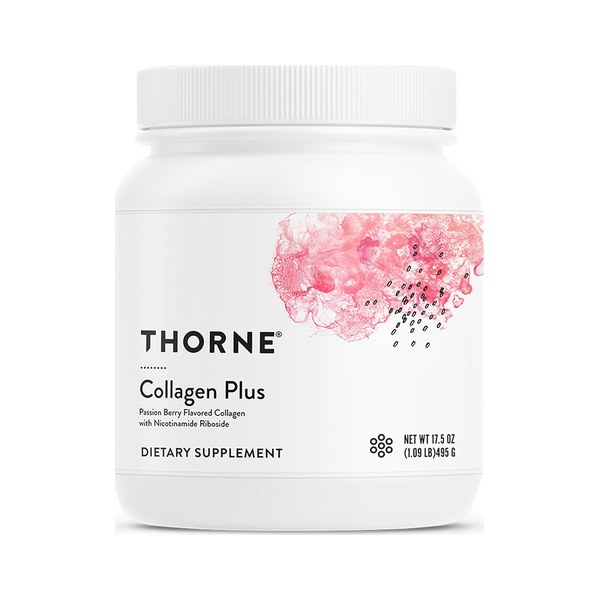 Our pick for women· $63.00
Thorne Collagen Plus
Built for the skin endpoint rather than adapted to it: collagen peptides at a trial-relevant dose plus nicotinamide riboside and ceramides, the adjuncts a skin-focused formulator actually reaches for. Thorne's testing reputation is the strongest of any non-certified brand. The honest caveats: the add-ons have their own early-stage evidence rather than proven synergy, and at $2.10 a serving you are paying formulation prices for a commodity base. For the buyer whose entire goal is skin, this is the considered choice.
- 02
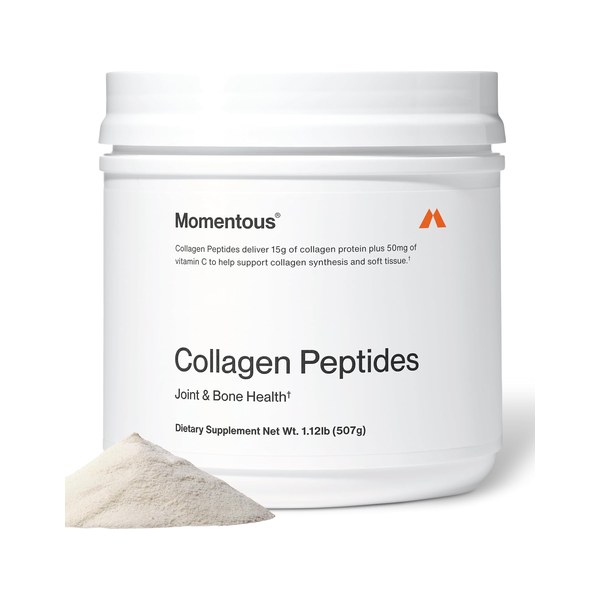 The bone-trial dose, certified· $50.00
Momentous Grass-Fed Collagen Peptides
The König bone-density trial that matters most to postmenopausal readers used 5 g of specific collagen peptides daily for a year; Momentous delivers triple that dose with the vitamin C cofactor included, and it is the only powder here with both NSF Certified for Sport and Informed Sport screening. If the bone and whole-body case is your priority, or you simply want the most-verified tub, this is it.
- 03
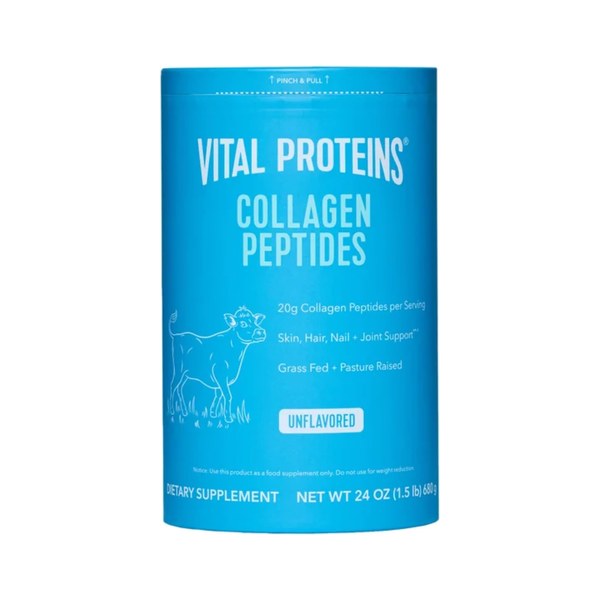 The dependable default· $43.99
Vital Proteins Collagen Peptides
The category benchmark: 20 g of clean single-ingredient bovine collagen, available in every store in America. Nothing about it is women-specific, and nothing needs to be; the underlying skin and joint trials largely enrolled women, and this covers their doses twice over. Full line-by-line audit in our Vital Proteins review.
- 04
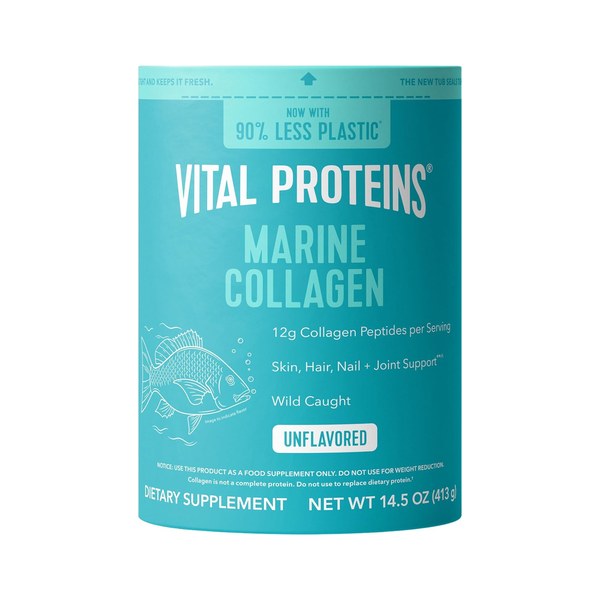 The marine option· $49.99
Vital Proteins Marine Collagen Peptides
Type I collagen from wild-caught white fish, mercury-tested, for readers avoiding bovine sources. The 'marine is better for skin' pitch is mechanism marketing, no outcome trial shows it beating bovine, but type I is the skin-dominant collagen and the product is clean. Choose it for dietary reasons, not for a hoped-for skin edge.
- 05
 Budget pick· $32.89
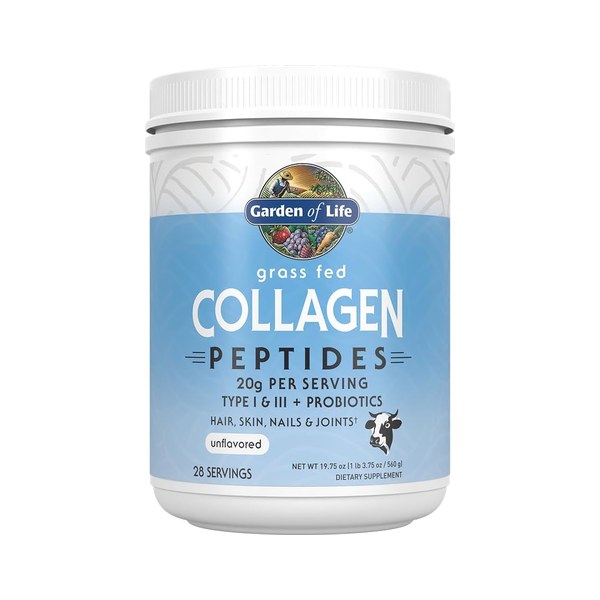
Garden of Life Grass Fed Collagen Peptides
20 g per serving at the lowest price on this list, with Non-GMO Project verification and a probiotic garnish that does no harm. If the monthly cost of the premium formulas is what stands between you and a proper 90-day trial of collagen, start here; dose consistency beats formulation elegance.
How we read the literature
- Evidence tier
- We grade the literature on four tiers, High (replicated RCTs or meta-analyses), Moderate (multiple trials with mixed findings), Low (a single pilot or case series), and Anecdotal (preclinical only, no human data). The tier appears on every compound profile beside the claim it supports.
- Trial stage
- Where a compound sits in the human development pipeline is recorded as Preclinical, Phase 1, Phase 2, or Phase 3+. We pull the current stage from ClinicalTrials.gov and the EU Clinical Trials Register on access date and re-verify quarterly.
- Regulatory status
- We state the FDA posture plainly, approved for indication X, or labeled for research use only, or removed from the 503A list, or investigational under a specific IND. Regulatory status changes; every post carries a review date.
- Where we're uncertain
- Every compound profile closes with a named uncertainty section, the question we can't answer from the current literature, the trial we'd want to see, the effect size we'd treat as a real signal. Uncertainty is not a failure mode here; it's load-bearing.
What readers ask us next.
- Is collagen actually different for women?
- The powder is not; 'women's collagen' is usually ordinary hydrolyzed collagen with marketing. What is genuinely woman-relevant is the evidence base: the skin-elasticity trials enrolled mostly women over 35, and the strongest bone-density data (König 2018) is specifically in postmenopausal women at 5 g daily for a year. Buy on dose, testing and price, not on pink labels.
- What does collagen do for menopause?
- Two relevant findings. Skin: estrogen decline accelerates collagen loss, and the trials showing improved elasticity and hydration at around 90 days enrolled exactly this demographic. Bone: one randomized year-long trial in postmenopausal women with reduced bone density reported improved bone mineral density at 5 g daily. The bone result awaits independent replication and is not a substitute for prescribed osteoporosis care.
- Does collagen help women's hair growth?
- There is no controlled trial of oral collagen for hair growth in anyone. The claim extrapolates from hair being protein. If hair is your primary goal, the honest answer is that nothing on this page is proven for it, and a clinician should rule out iron, thyroid and hormonal causes before any supplement.
- Can I take collagen while pregnant or breastfeeding?
- Collagen is digested as ordinary food protein and has no specific safety signal, but supplements are not safety-tested in pregnancy as a class, and trial populations excluded pregnant women. That makes it a question for your obstetric provider, not a supplement review site. We do not make recommendations for pregnancy.
- How much collagen per day should a woman take?
- We report trial doses rather than prescribe: 2.5 to 10 g daily in the skin studies, 5 g in the postmenopausal bone trial, 10 g in the joint trial. Every product on this list covers those numbers in one serving. Our dosing guide breaks the full table down endpoint by endpoint.
A reformulation that changes an ingredient panel. A failed third-party test or a recall. New trial data on a hero ingredient, in either direction. A meaningful price change. Any of those would move entries on this list within a week, with a dated note on what changed.
References cited on this page.
PubMed, ClinicalTrials.gov, and FDA documents only. Secondary sources appear when needed to characterize public discourse, never as a source for a clinical claim.
- [01]König D et al. Specific collagen peptides improve bone mineral density and bone markers in postmenopausal women. Nutrients 2018
- [02]Proksch E et al. Oral supplementation of specific collagen peptides has beneficial effects on human skin physiology. Skin Pharmacol Physiol 2014
- [03]de Miranda RB et al. Effects of hydrolyzed collagen supplementation on skin aging: a systematic review and meta-analysis. Int J Dermatol 2021
- [04]Bolke L et al. A collagen supplement improves skin hydration, elasticity, roughness, and density. Nutrients 2019
About The Pepvise Editorial Team
The Pepvise Editorial Team is a small group of researchers and science writers reading the peer-reviewed peptide literature and translating it into calm, cited analysis. We do not sell peptides, recommend peptides, or tell readers what to administer. We describe what has been measured, by whom, at what scale, with what effect size.
Compound reviews are signed off by Dr. Priya Narang, MD, MPH (endocrinologist) and Dr. Marcus Haley, PharmD, BCPS (board-certified clinical pharmacist). Both hold verifiable state-board licenses and have signed editorial-independence letters with us. See the full editorial board →
Adjacent in the literature.
The 8 Best Collagen Peptides, Ranked
Eight collagen peptide powders compared on dose per serving, collagen type, third-party testing, and price per serving. Ranked from the ingredient panel and the published trials, before any link was attached.
13 min readConsumer · ComparisonThe 8 Best Peptide Serums, Ranked
Eight peptide serums and creams compared on which peptides they actually contain, what published evidence sits behind each one, and what you pay per millilitre. Ranked from the INCI list, not the marketing.
13 min readConsumer · Compound profileCollagen Peptides: What the Trials Show
What hydrolyzed collagen actually is, how the peptides survive digestion, and what the randomized trials show for skin, joints, bone and muscle. The evidence, graded the way we grade research compounds.
15 min readGet the 2026 Peptide Evidence Ledger.
A 12-page PDF summary of where 10 major compounds sit, Preclinical / Human pilot / Phase trial / FDA status. Updated quarterly. Free.
By subscribing, you agree to our Privacy Policy. One calm, cited email a week. Unsubscribe anytime.