The best peptide serums, ranked by the formula
Eight peptide serums and creams compared on which peptides they actually contain, what published evidence sits behind each one, and what you pay per millilitre. Ranked from the INCI list, not the marketing.
By The PepVise Editorial Team · Reviewed June 4, 2026 · 13 min read
Rankings on PepVise are set by the ingredient panel and the published evidence before any link is attached. Commissions never reorder the list.
In order of evidence weight.
- 01
 Our pick· $28.90
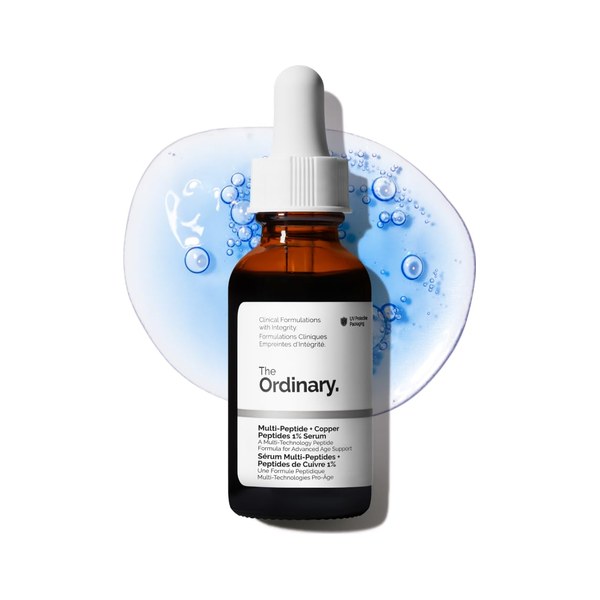
The Ordinary Multi-Peptide + Copper Peptides 1%
One percent copper tripeptide-1, the copper-bound form of GHK, which has the deepest literature of any cosmetic peptide: decades of wound-healing and skin-remodeling work summarized in Pickart's reviews, plus small controlled facial studies reporting improved density and reduced fine lines. The base adds Matrixyl 3000, Matrixyl synthe'6 and Argireline. The blue serum oxidizes if stored carelessly and the texture is slightly tacky; neither changes the evidence math. The strongest formula-per-dollar in the category.
- 02
 The trial pick· $29.99
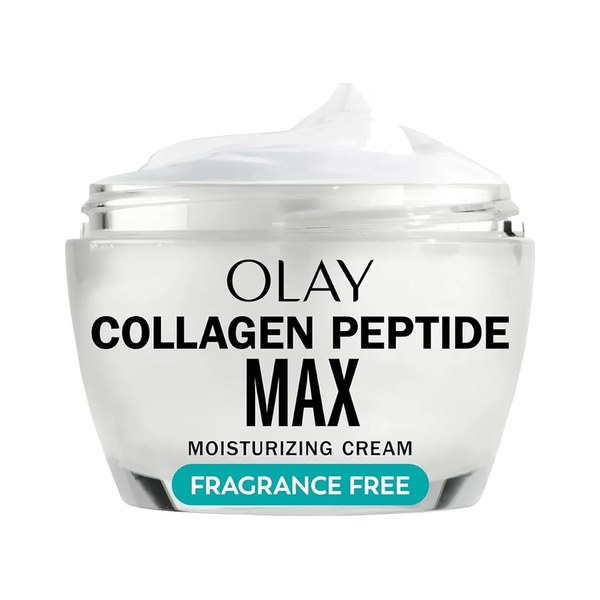
Olay Regenerist Collagen Peptide 24 MAX
The hero here is palmitoyl pentapeptide-4 (pal-KTTKS), the one cosmetic peptide with a rigorous published facial trial behind it: Robinson 2005, twelve weeks, double-blind, vehicle-controlled, with measurable wrinkle reduction versus the vehicle. P&G ran that trial on this ingredient. The MAX version doubles the peptide and niacinamide load of the base cream and skips fragrance. As close as the drugstore gets to a peptide product with classical evidence.
- 03
 Best value· $23.90
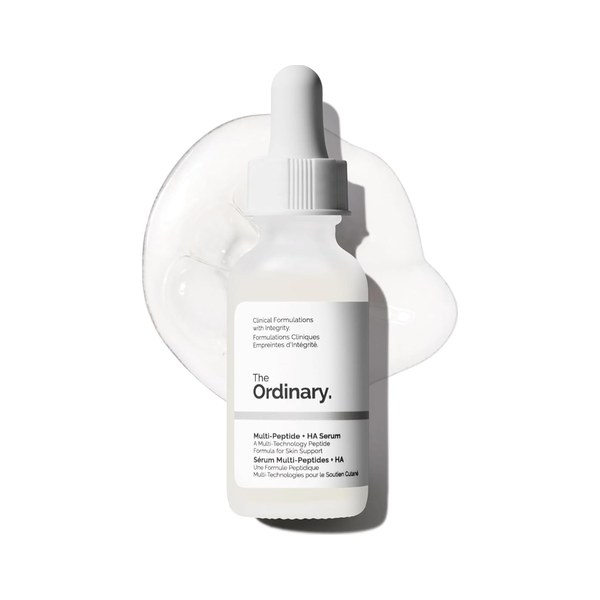
The Ordinary Multi-Peptide + HA Serum
The serum formerly sold as Buffet: Matrixyl 3000 (palmitoyl tripeptide-1 plus tetrapeptide-7), Matrixyl synthe'6, Argireline and SYN-AKE in one bottle with layered hyaluronic acid. Each peptide carries supplier-sponsored data rather than independent trials, which is the honest grade for most of this category. As a first peptide product, or the body of a routine that adds a copper or pal-KTTKS hero on top, it is the obvious entry point.
- 04
 Budget barrier pick· $15.44
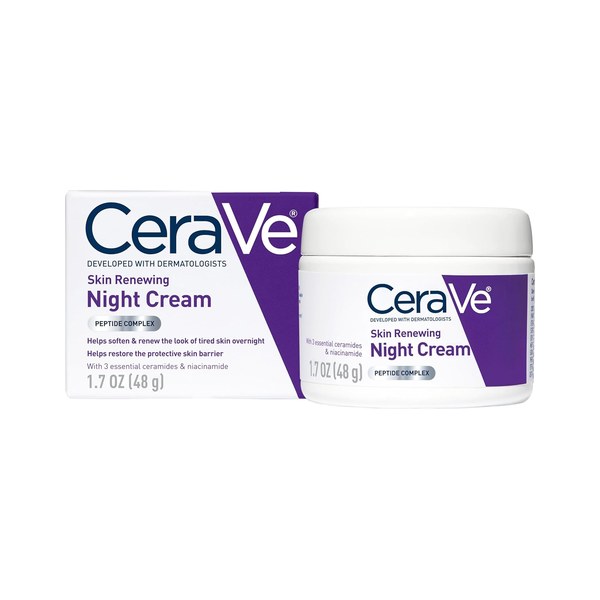
CeraVe Skin Renewing Night Cream
The peptide complex (caprooyl tetrapeptide-3 and palmitoyl tripeptide-1) rides along with the things CeraVe actually does best: three ceramides, niacinamide and the brand's slow-release delivery system. The barrier-repair ingredients carry better evidence than the peptides do, which is exactly why this is the right budget pick. Most visible skin-aging complaints respond to hydration and barrier function first; this delivers those for the price of lunch, with peptides as a bonus.
- 05
 Value per millilitre· $25.00
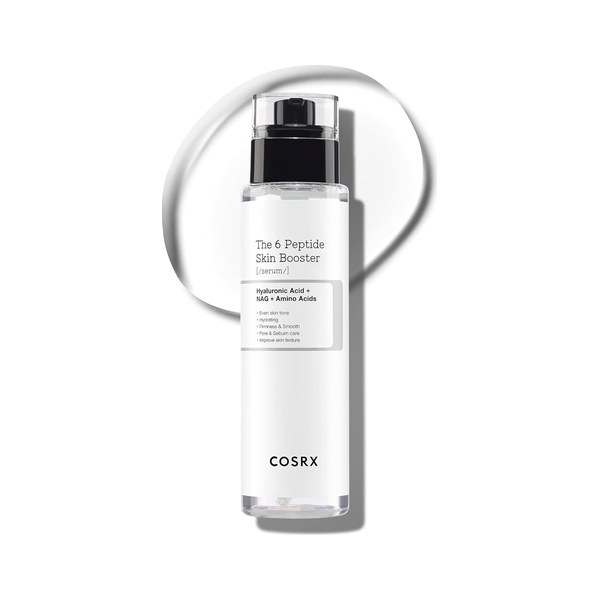
COSRX The 6 Peptide Skin Booster Serum
150 mL for the price most brands charge for 30, with copper tripeptide-1 and Argireline on the INCI list plus niacinamide and hyaluronic acid. The peptide concentrations are undisclosed and presumably modest at this dilution, which is why it ranks below the bottles above despite the headline ingredient overlap. As a generously sized hydrating serum with a real peptide presence, it has no peer at the price.
- 06
 The stacker· $50.00
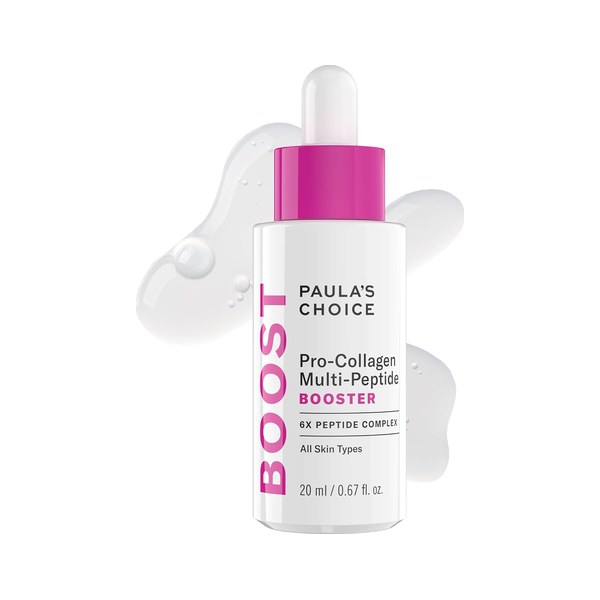
Paula's Choice Pro-Collagen Multi-Peptide Booster
Six signal peptides including SYN-COLL (palmitoyl tripeptide-5, with supplier data on wrinkle volume) in a 20 mL booster designed to be mixed into an existing moisturizer or serum. Paula's Choice publishes its ingredient rationale more transparently than most, which we credit. You are paying a premium per millilitre for format flexibility; the chemistry itself is comparable to bottles half the price.
- 07
 The texture pick· $68.00
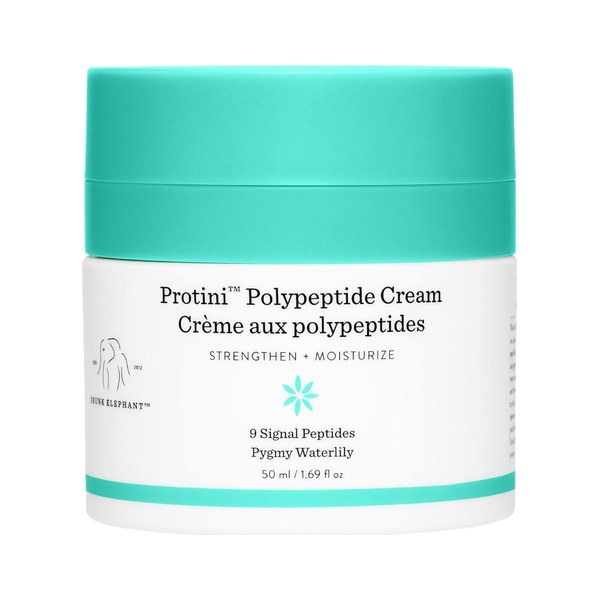
Drunk Elephant Protini Polypeptide Cream
Nine signal peptides including growth-factor-like oligopeptides and a copper peptide, in a moisturizer people genuinely enjoy using, which matters for adherence. The evidence note: the sh-oligopeptide (EGF-like) class leans on in-vitro and small open-label data, and the brand's own claims testing, rather than controlled facial trials. You are paying sensorial-luxury prices for evidence parity with much cheaper bottles. Ranked for quality, priced for the brand.
- 08
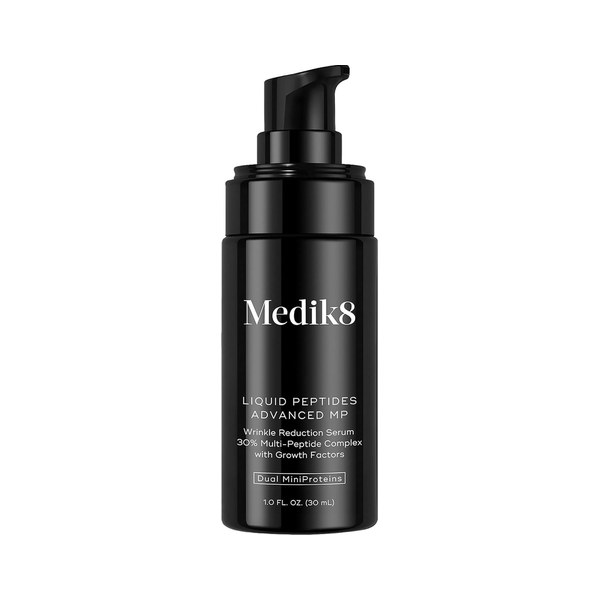 The premium stack· $94.00
Medik8 Liquid Peptides Advanced MP
A 30 percent multi-peptide blend that reads like an index of the category: Matrixyl 3000, Matrixyl synthe'6, copper palmitoyl heptapeptide-14, Argireline, pentapeptide-18 and more, in a drone-delivery encapsulation system the brand cites its own seven-day claims testing for. It is a genuinely maximal formula. Whether stacking ten supplier-backed peptides beats two well-chosen ones is unanswered in any published trial, which is the only reason the most expensive bottle here is not ranked first.
How we read the literature
- Evidence tier
- We grade the literature on four tiers, High (replicated RCTs or meta-analyses), Moderate (multiple trials with mixed findings), Low (a single pilot or case series), and Anecdotal (preclinical only, no human data). The tier appears on every compound profile beside the claim it supports.
- Trial stage
- Where a compound sits in the human development pipeline is recorded as Preclinical, Phase 1, Phase 2, or Phase 3+. We pull the current stage from ClinicalTrials.gov and the EU Clinical Trials Register on access date and re-verify quarterly.
- Regulatory status
- We state the FDA posture plainly, approved for indication X, or labeled for research use only, or removed from the 503A list, or investigational under a specific IND. Regulatory status changes; every post carries a review date.
- Where we're uncertain
- Every compound profile closes with a named uncertainty section, the question we can't answer from the current literature, the trial we'd want to see, the effect size we'd treat as a real signal. Uncertainty is not a failure mode here; it's load-bearing.
What readers ask us next.
- Do peptide serums actually work?
- Within cosmetic limits, some do. The best-supported are palmitoyl pentapeptide-4 (a 12-week double-blind facial trial, Robinson 2005) and copper tripeptide-1/GHK-Cu (decades of wound-healing literature and small controlled facial studies). Most other cosmetic peptides rest on supplier-sponsored testing. Expect modest improvement in fine lines, firmness and texture over 8 to 12 weeks, not a procedural result.
- Which peptide has the best evidence?
- Copper tripeptide-1 (GHK-Cu) has the deepest literature overall, spanning wound healing and skin remodeling; palmitoyl pentapeptide-4 (pal-KTTKS, sold as Matrixyl) has the single most rigorous published facial trial. Argireline has one small published study on wrinkle depth plus supplier data. If you want the evidence-dense routine, those are the two heroes to own.
- Can I use peptides with retinol or vitamin C?
- Peptides layer well with retinoids and niacinamide. The one caution in the literature concerns direct combination of copper peptides with strong ascorbic acid (vitamin C) formulas, since copper can destabilize ascorbic acid; using them at different times of day sidesteps the question entirely. Nothing about ordinary peptide serums requires you to give up a retinoid, which remains the better-evidenced ingredient class.
- How long until I see results?
- The published facial studies measured at 4 to 12 weeks, with most endpoints read at 8 or 12. Supplier claims of visible change in days describe instrument-measured hydration effects, not structural change. Give a peptide product 12 weeks with a consistent routine and a day-zero photo before judging it.
- Is an expensive peptide cream better than a cheap one?
- Price in this category tracks brand position and texture, not evidence. The two best-supported peptides on this page appear in bottles under thirty dollars (The Ordinary, Olay). What premium prices buy is formulation elegance, sensory experience and sometimes higher disclosed concentrations. Those are legitimate preferences; they are not better data.
- Are topical peptides the same as injectable research peptides?
- No, and the distinction matters. Cosmetic peptides are applied to skin, regulated as cosmetics, and work (where they work) on the upper skin layers. Injectable research compounds like the GHK-Cu studied in regenerative research are a different legal and biological context entirely; we cover that side in our GHK-Cu compound profile. PepVise links to no vendor of injectable peptides.
A reformulation that changes an ingredient panel. A failed third-party test or a recall. New trial data on a hero ingredient, in either direction. A meaningful price change. Any of those would move entries on this list within a week, with a dated note on what changed.
References cited on this page.
PubMed, ClinicalTrials.gov, and FDA documents only. Secondary sources appear when needed to characterize public discourse, never as a source for a clinical claim.
- [01]Robinson LR et al. Topical palmitoyl pentapeptide provides improvement in photoaged human facial skin. Int J Cosmet Sci 2005
- [02]Pickart L, Margolina A. Regenerative and protective actions of the GHK-Cu peptide in the light of the new gene data. Int J Mol Sci 2018
- [03]Blanes-Mira C et al. A synthetic hexapeptide (Argireline) with antiwrinkle activity. Int J Cosmet Sci 2002
- [04]Gorouhi F, Maibach HI. Role of topical peptides in preventing or treating aged skin. Int J Cosmet Sci 2009
About The Pepvise Editorial Team
The Pepvise Editorial Team is a small group of researchers and science writers reading the peer-reviewed peptide literature and translating it into calm, cited analysis. We do not sell peptides, recommend peptides, or tell readers what to administer. We describe what has been measured, by whom, at what scale, with what effect size.
Compound reviews are signed off by Dr. Priya Narang, MD, MPH (endocrinologist) and Dr. Marcus Haley, PharmD, BCPS (board-certified clinical pharmacist). Both hold verifiable state-board licenses and have signed editorial-independence letters with us. See the full editorial board →
Adjacent in the literature.
Collagen Peptides vs Collagen: The Difference
Collagen peptides vs collagen on the evidence: why hydrolyzed peptides are absorbed while gelatin and whole collagen are not, which form the human trials actually used, and how undenatured type II fits.
9 min readConsumer · ExplainerHow to Boost Collagen Production Naturally
How to boost collagen production on the evidence: the vitamin C and protein your body needs to build it, the topical retinoids that raise it, and the sun, smoking and sugar that break it down.
9 min readConsumer · ComparisonThe 8 Best Collagen Peptides, Ranked
Eight collagen peptide powders compared on dose per serving, collagen type, third-party testing, and price per serving. Ranked from the ingredient panel and the published trials, before any link was attached.
13 min readGet the 2026 Peptide Evidence Ledger.
A 12-page PDF summary of where 10 major compounds sit, Preclinical / Human pilot / Phase trial / FDA status. Updated quarterly. Free.
By subscribing, you agree to our Privacy Policy. One calm, cited email a week. Unsubscribe anytime.