How to boost your own collagen production, by the evidence
By The PepVise Editorial Team · Reviewed July 22, 2026 · 9 min read
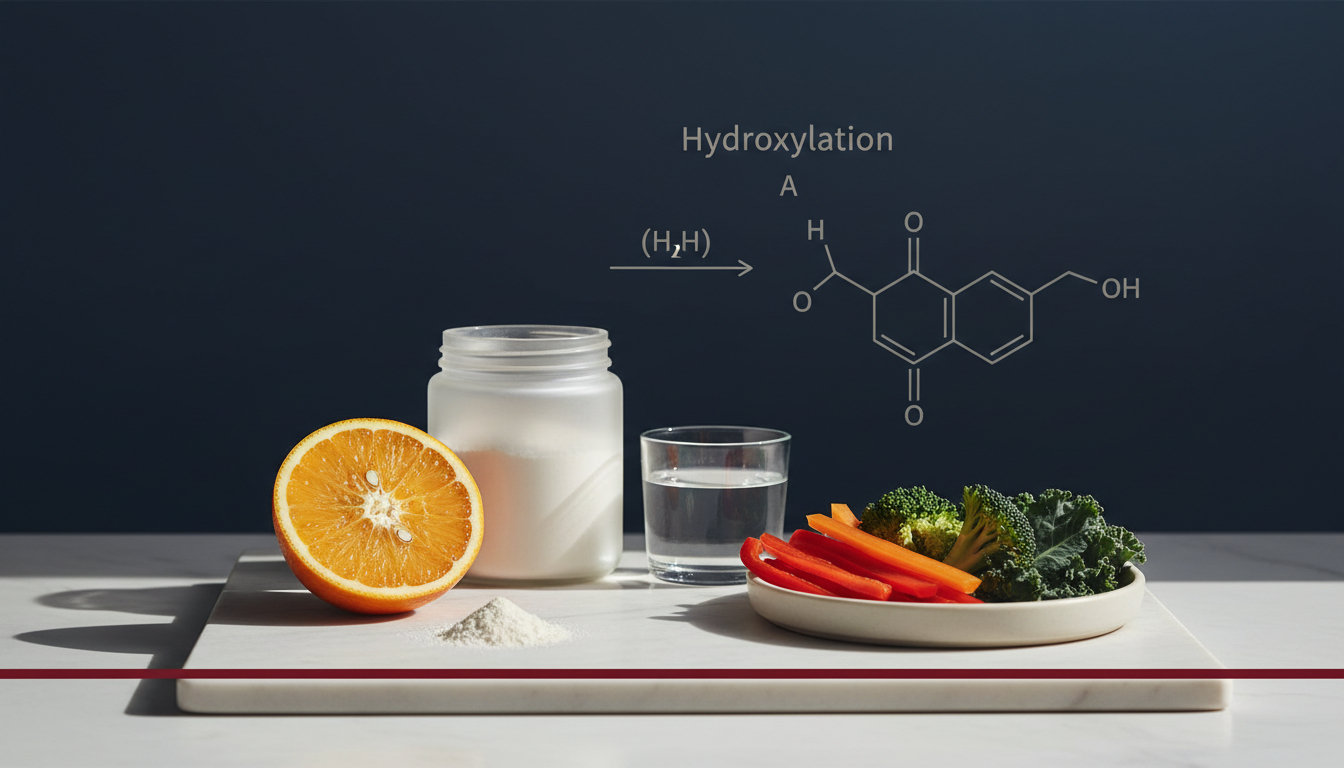
How to boost collagen production on the evidence: the vitamin C and protein your body needs to build it, the topical retinoids that raise it, and the sun, smoking and sugar that break it down.
Mechanism explainers on PepVise aim for textbook-level clarity without the textbook's refusal to commit to a reading.
What readers ask us next.
- Can you naturally boost collagen production?
- To a modest degree, yes, mostly by supporting synthesis and reducing breakdown. That means eating enough protein and vitamin C, the direct cofactor for collagen synthesis, using a topical retinoid, which has the best evidence among applied products, and above all protecting existing collagen with daily sun protection and by not smoking. The effects are cumulative and modest rather than dramatic, and protection matters more than any single supplement.
- Which vitamin is most important for collagen?
- Vitamin C. It is a required cofactor for the enzymes that hydroxylate proline and lysine, the step that lets collagen form its stable triple helix, which is why severe deficiency causes collagen to fail. Adequacy from a normal diet covers this; there is no good evidence that megadoses build extra collagen in someone who is not deficient.
- Do topical products actually increase collagen?
- Retinoids have the strongest evidence. Prescription tretinoin, and more modestly over-the-counter retinol, increase procollagen production and reduce the enzymes that break it down, with trials such as Kafi 2007 showing improvement in aged skin. Vitamin C and peptide ingredients are softer versions of the same idea. Most other cosmetic claims to boost collagen are weakly supported.
- What destroys collagen the fastest?
- Ultraviolet light from the sun is the largest driver of collagen loss in skin, activating enzymes that break it down, which is why sun protection is the most evidence-backed collagen strategy. Smoking accelerates the same breakdown, and a high-sugar diet drives glycation that stiffens collagen fibers. Avoiding these protects far more collagen than any supplement adds.
- Do collagen supplements boost your own collagen?
- Oral collagen peptides are a modest lever, not a master switch. Controlled trials link specific hydrolyzed peptides to small gains in skin elasticity and hydration, with the proposed mechanism being peptide fragments that signal skin cells. They are a reasonable minor addition, but they sit below sun protection, adequate protein and vitamin C, and topical retinoids in evidence strength.
References cited on this page.
PubMed, ClinicalTrials.gov, and FDA documents only. Secondary sources appear when needed to characterize public discourse, never as a source for a clinical claim.
- [01]Pullar JM, Carr AC, Vissers MCM. The Roles of Vitamin C in Skin Health. Nutrients 2017
- [02]Shaw G et al. Vitamin C-enriched gelatin supplementation before intermittent activity augments collagen synthesis. Am J Clin Nutr 2017
- [03]Kafi R et al. Improvement of naturally aged skin with vitamin A (retinol). Arch Dermatol 2007
- [04]Varani J et al. Decreased collagen production in chronologically aged skin: roles of age-dependent alteration in fibroblast function and defective mechanical stimulation. Am J Pathol 2006
- [05]Fisher GJ et al. Mechanisms of photoaging and chronological skin aging. Arch Dermatol 2002
- [06]Danby FW. Nutrition and aging skin: sugar and glycation. Clin Dermatol 2010
- [07]Proksch E et al. Oral supplementation of specific collagen peptides has beneficial effects on human skin physiology. Skin Pharmacol Physiol 2014
About The Pepvise Editorial Team
The Pepvise Editorial Team is a small group of researchers and science writers reading the peer-reviewed peptide literature and translating it into calm, cited analysis. We do not sell peptides, recommend peptides, or tell readers what to administer. We describe what has been measured, by whom, at what scale, with what effect size.
Compound reviews are signed off by Dr. Priya Narang, MD, MPH (endocrinologist) and Dr. Marcus Haley, PharmD, BCPS (board-certified clinical pharmacist). Both hold verifiable state-board licenses and have signed editorial-independence letters with us. See the full editorial board →
Adjacent in the literature.
Collagen Peptides vs Collagen: The Difference
Collagen peptides vs collagen on the evidence: why hydrolyzed peptides are absorbed while gelatin and whole collagen are not, which form the human trials actually used, and how undenatured type II fits.
9 min readConsumer · ComparisonThe 8 Best Collagen Peptides, Ranked
Eight collagen peptide powders compared on dose per serving, collagen type, third-party testing, and price per serving. Ranked from the ingredient panel and the published trials, before any link was attached.
13 min readConsumer · ComparisonThe 8 Best Peptide Serums, Ranked
Eight peptide serums and creams compared on which peptides they actually contain, what published evidence sits behind each one, and what you pay per millilitre. Ranked from the INCI list, not the marketing.
13 min readGet the 2026 Peptide Evidence Ledger.
A 12-page PDF summary of where 10 major compounds sit, Preclinical / Human pilot / Phase trial / FDA status. Updated quarterly. Free.
By subscribing, you agree to our Privacy Policy. One calm, cited email a week. Unsubscribe anytime.