The best collagen peptides, ranked by evidence
Eight collagen peptide powders compared on dose per serving, collagen type, third-party testing, and price per serving. Ranked from the ingredient panel and the published trials, before any link was attached.
By The PepVise Editorial Team · Reviewed June 4, 2026 · 13 min read
Rankings on PepVise are set by the ingredient panel and the published evidence before any link is attached. Commissions never reorder the list.
In order of evidence weight.
- 01
 Our pick· $50.00
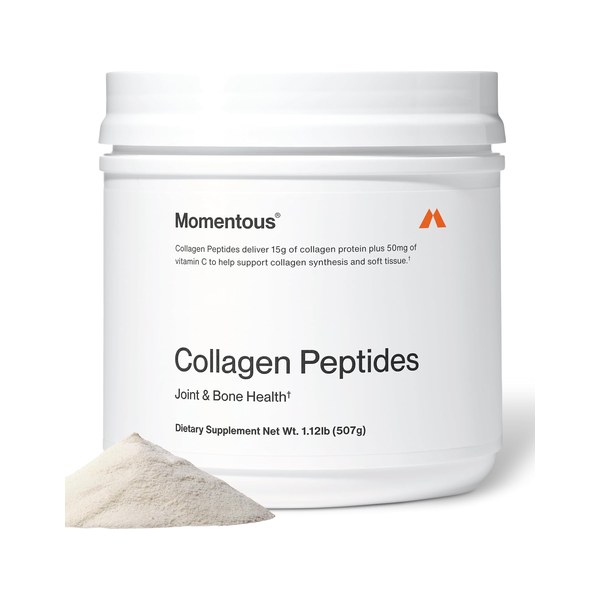
Momentous Grass-Fed Collagen Peptides
15 g of collagen per serving, split between 10 g grass-fed bovine peptides and 5 g of FORTIGEL, the specific peptide preparation used in several of the tendon and joint trials. Every batch is screened under both NSF Certified for Sport and Informed Sport, which is the strictest third-party regime available to a supplement. Added vitamin C is a small but chemically literate touch, since proline and lysine hydroxylation in collagen synthesis is vitamin C dependent. The most expensive way to buy collagen on this list, and the most defensible.
- 02
 Best value· $36.99
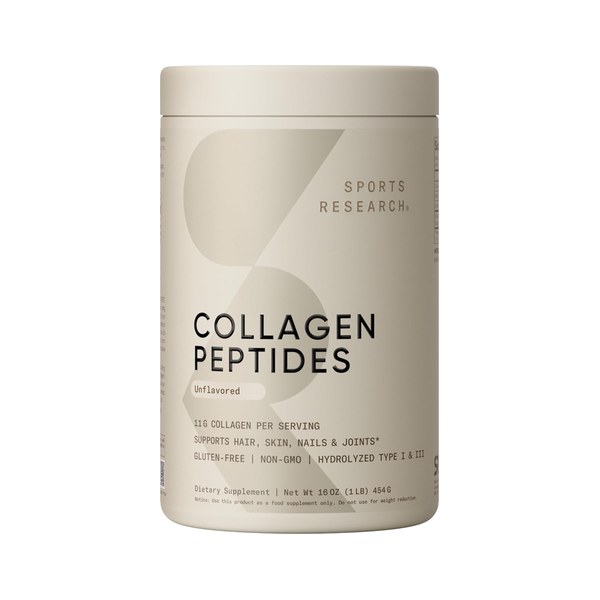
Sports Research Collagen Peptides
11 g of hydrolyzed bovine type I and III per serving at roughly ninety cents a serving, the best price of any certified powder here. Informed Protein certification verifies the protein content claim, IGEN covers the non-GMO claim, and the company publishes heavy-metal testing. The serving lands at the dose range the joint literature used (around 10 g per day in Clark 2008). If you want the trial-relevant dose at the lowest certified price, this is the rational default.
- 03
 The category leader· $43.99
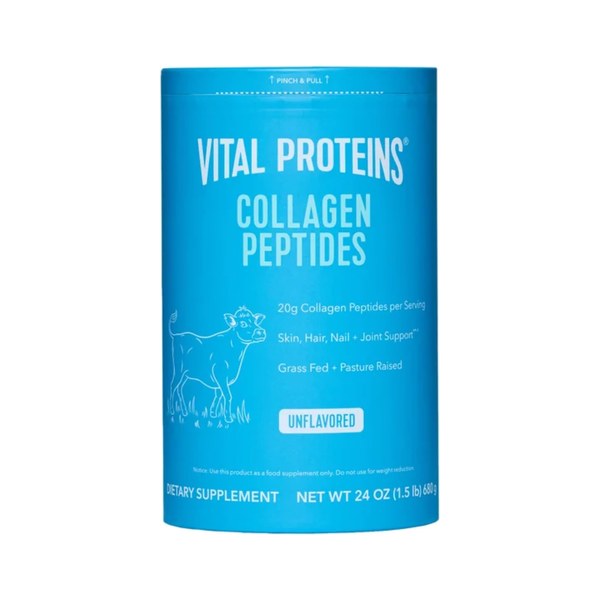
Vital Proteins Collagen Peptides
The powder that built the category, and still a clean ingredient panel: 20 g of hydrolyzed bovine type I and III, single ingredient, unflavored, dissolves without grit. 20 g comfortably covers every dose used in the published trials. What it does not carry is sport-level third-party certification, which is the one line on the spec sheet where the cheaper Sports Research tub beats it. If brand consistency and availability matter to you, nothing here will disappoint.
- 04
 Certification stack· $32.89
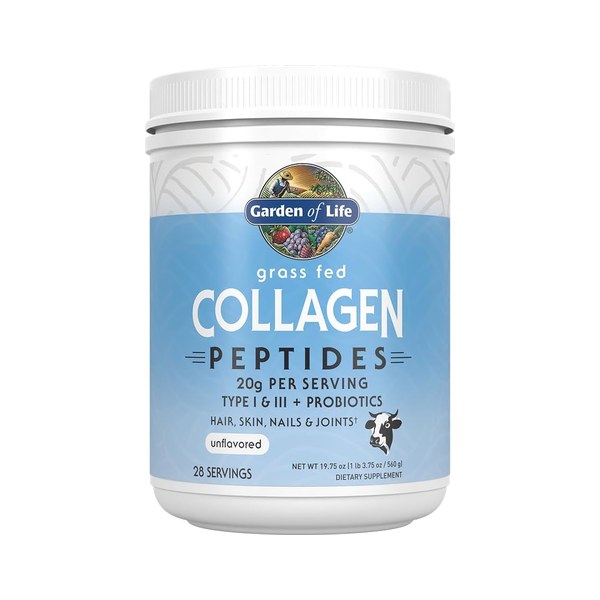
Garden of Life Grass Fed Collagen Peptides
20 g of grass-fed collagen per serving with Non-GMO Project verification and NSF gluten-free certification, at one of the lowest prices per gram on the list. The added probiotics are a marketing flourish rather than an evidence play (1.5 billion CFU is a modest dose, and no trial pairs probiotics with collagen endpoints), but they do no harm. A strong budget alternative when the Sports Research tub is out of stock.
- 05
 The skin formula· $63.00
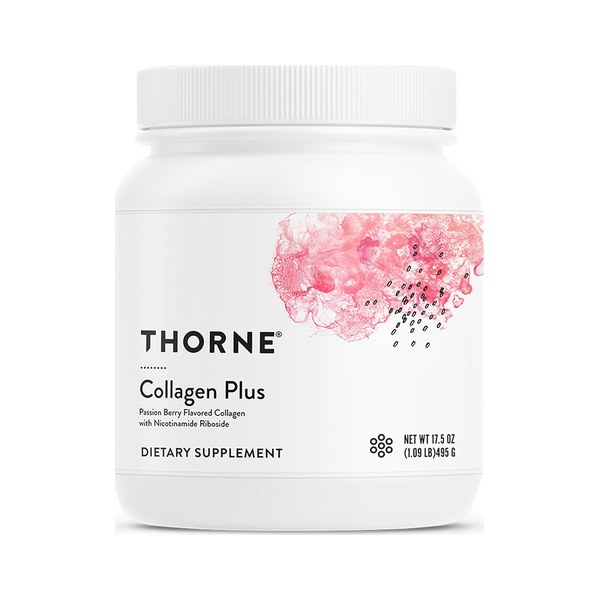
Thorne Collagen Plus
Thorne's entry is a formulation rather than a commodity: 13 to 15 g of collagen peptides plus nicotinamide riboside and plant ceramides, aimed squarely at the skin endpoints. Thorne's four-stage in-house testing program is credible, though note this specific SKU is the beauty formula, not Thorne's NSF-Sport-certified line. The highest price per serving here. Choose it if the skin outcome is the entire reason you are buying collagen and you want the adjuncts in one scoop.
- 06
 Budget single-ingredient· $33.99
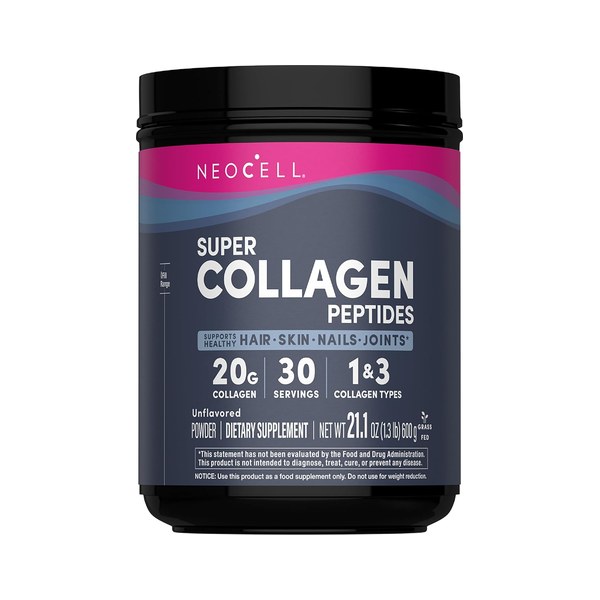
NeoCell Super Collagen Peptides
One of the oldest names in consumer collagen, now a straightforward 20 g hydrolyzed bovine type I and III powder with IGEN non-GMO verification. It does what the bigger names do at a lower shelf price, with a less complete public testing dossier than Sports Research or Momentous. A reasonable pick when price is the deciding variable and you still want a recognizable brand.
- 07
 The multi-type· $38.96
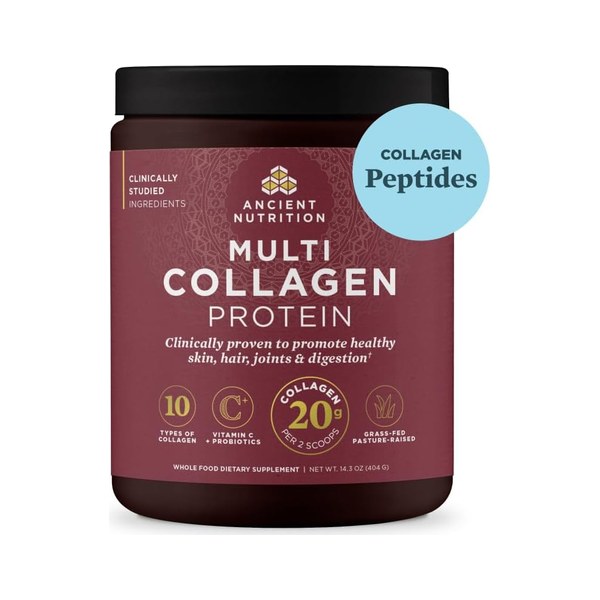
Ancient Nutrition Multi Collagen Protein
Collagen types I, II, III, V and X from beef, chicken, fish and eggshell membrane, with added vitamin C. The honest note: the multi-type pitch outruns the evidence, because the published trials used hydrolyzed type I and III (or specific peptide preparations), not five-type blends, and hydrolysis largely erases type identity anyway. Ranked here because the panel is still solid and some readers specifically want fish and chicken sources represented. Buy it for the sourcing, not the type count.
- 08
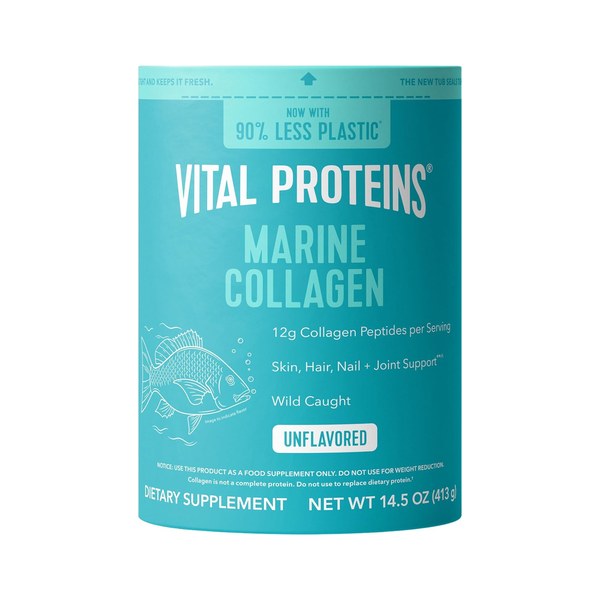 The marine option· $49.99
Vital Proteins Marine Collagen Peptides
12 g of type I collagen from wild-caught white fish, mercury-tested, single ingredient. Marine collagen's smaller average peptide size is sometimes marketed as better absorbed; the human outcome data does not separate it from bovine, so treat that claim as unproven. This is the pick for pescatarians and anyone avoiding bovine sources, at a premium per gram. Everyone else gets the same endpoints cheaper from the powders above.
How we read the literature
- Evidence tier
- We grade the literature on four tiers, High (replicated RCTs or meta-analyses), Moderate (multiple trials with mixed findings), Low (a single pilot or case series), and Anecdotal (preclinical only, no human data). The tier appears on every compound profile beside the claim it supports.
- Trial stage
- Where a compound sits in the human development pipeline is recorded as Preclinical, Phase 1, Phase 2, or Phase 3+. We pull the current stage from ClinicalTrials.gov and the EU Clinical Trials Register on access date and re-verify quarterly.
- Regulatory status
- We state the FDA posture plainly, approved for indication X, or labeled for research use only, or removed from the 503A list, or investigational under a specific IND. Regulatory status changes; every post carries a review date.
- Where we're uncertain
- Every compound profile closes with a named uncertainty section, the question we can't answer from the current literature, the trial we'd want to see, the effect size we'd treat as a real signal. Uncertainty is not a failure mode here; it's load-bearing.
What readers ask us next.
- Do collagen peptides actually do anything?
- For specific endpoints, the human data is real: a 2021 meta-analysis of 19 randomized trials (n=1,125) found improved skin hydration and elasticity after 90 days of hydrolyzed collagen, and trials in athletes reported reduced activity-related joint pain at around 10 g per day. The caveats are that many trials are industry-funded and effect sizes are modest. We grade the full evidence base, benefit by benefit, in our collagen peptides explainer.
- What should I look for on the label?
- Three things. Dose: the published trials used roughly 2.5 to 15 g per day depending on the endpoint, so a tub delivering under 10 g per serving limits your options. Form: hydrolyzed collagen or collagen peptides, which are the forms with trial data. Verification: third-party certification (NSF, Informed Sport, Informed Protein) is the only independent check that what is on the label is in the tub.
- Is marine collagen better than bovine?
- No human outcome trial has shown marine collagen beating bovine for skin, joint, or any other endpoint. The absorption argument rests on average peptide size, which is a mechanism, not an outcome. Choose marine if you avoid beef for dietary or religious reasons, and choose by dose, testing, and price otherwise.
- Does the collagen type (I, II, III, V, X) matter?
- Less than the marketing suggests. Hydrolysis breaks collagen into short peptides, which largely erases the structural identity of the original type. The trials behind the skin and joint claims used hydrolyzed type I and III or specific peptide preparations such as VERISOL and FORTIGEL. Multi-type blends are not better supported; they are differently sourced.
- Can collagen replace protein powder?
- No. Collagen is a low-quality protein by amino-acid standards: it lacks tryptophan entirely and is low in leucine, the amino acid that drives muscle protein synthesis. Count it toward variety, not toward your protein target. For muscle endpoints, the one strong collagen trial (Zdzieblik 2015) paired 15 g daily with structured resistance training in a specific elderly population.
- When will I notice anything?
- The skin trials measured at 8 to 12 weeks; the joint trials ran 12 to 24 weeks. Nothing in the literature supports day-one or week-one effects. If you try a powder, the rational experiment is one tub at a trial-relevant dose for a full 90 days, judged against a photo and a symptom note from day zero rather than memory.
A reformulation that changes an ingredient panel. A failed third-party test or a recall. New trial data on a hero ingredient, in either direction. A meaningful price change. Any of those would move entries on this list within a week, with a dated note on what changed.
References cited on this page.
PubMed, ClinicalTrials.gov, and FDA documents only. Secondary sources appear when needed to characterize public discourse, never as a source for a clinical claim.
- [01]de Miranda RB et al. Effects of hydrolyzed collagen supplementation on skin aging: a systematic review and meta-analysis. Int J Dermatol 2021
- [02]Proksch E et al. Oral supplementation of specific collagen peptides has beneficial effects on human skin physiology. Skin Pharmacol Physiol 2014
- [03]Clark KL et al. 24-week study on the use of collagen hydrolysate as a dietary supplement in athletes with activity-related joint pain. Curr Med Res Opin 2008
- [04]Zdzieblik D et al. Collagen peptide supplementation in combination with resistance training improves body composition in elderly sarcopenic men. Br J Nutr 2015
- [05]König D et al. Specific collagen peptides improve bone mineral density and bone markers in postmenopausal women. Nutrients 2018
- [06]Shaw G et al. Vitamin C-enriched gelatin supplementation before intermittent activity augments collagen synthesis. Am J Clin Nutr 2017
About The Pepvise Editorial Team
The Pepvise Editorial Team is a small group of researchers and science writers reading the peer-reviewed peptide literature and translating it into calm, cited analysis. We do not sell peptides, recommend peptides, or tell readers what to administer. We describe what has been measured, by whom, at what scale, with what effect size.
Compound reviews are signed off by Dr. Priya Narang, MD, MPH (endocrinologist) and Dr. Marcus Haley, PharmD, BCPS (board-certified clinical pharmacist). Both hold verifiable state-board licenses and have signed editorial-independence letters with us. See the full editorial board →
Adjacent in the literature.
The 8 Best Peptide Serums, Ranked
Eight peptide serums and creams compared on which peptides they actually contain, what published evidence sits behind each one, and what you pay per millilitre. Ranked from the INCI list, not the marketing.
13 min readConsumer · Compound profileCollagen Peptides: What the Trials Show
What hydrolyzed collagen actually is, how the peptides survive digestion, and what the randomized trials show for skin, joints, bone and muscle. The evidence, graded the way we grade research compounds.
15 min readConsumer · Compound profilePeptides in Skincare: What They Actually Do
Signal peptides, carrier peptides, neurotransmitter inhibitors: what each class claims, what the published studies actually show, and how to read an ingredient list like an analyst.
14 min readGet the 2026 Peptide Evidence Ledger.
A 12-page PDF summary of where 10 major compounds sit, Preclinical / Human pilot / Phase trial / FDA status. Updated quarterly. Free.
By subscribing, you agree to our Privacy Policy. One calm, cited email a week. Unsubscribe anytime.