Matrixyl, decoded
By The PepVise Editorial Team · Reviewed June 4, 2026 · 9 min read
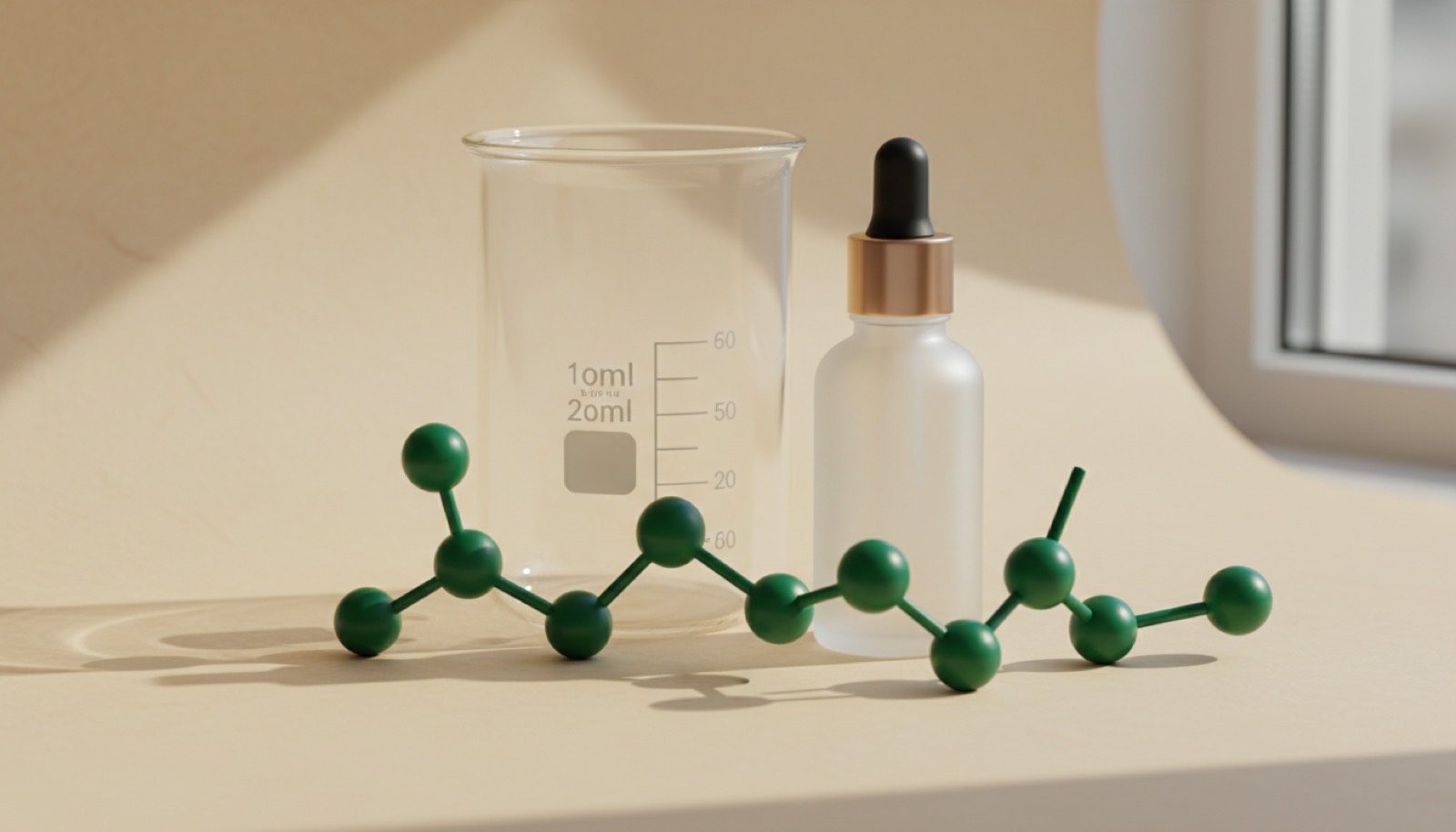
Matrixyl, Matrixyl 3000 and Matrixyl synthe'6 are three different peptide technologies wearing one trade name. Which is which on an ingredient list, what the published evidence supports, and which products carry a real dose.
Mechanism explainers on PepVise aim for textbook-level clarity without the textbook's refusal to commit to a reading.
What readers ask us next.
- What does Matrixyl do for skin?
- It is a collagen-fragment signal peptide: applied topically, it prompts fibroblasts in the upper skin layers to increase collagen and fibronectin production. In the one rigorous published trial (12 weeks, double-blind, vehicle-controlled), that translated to measurable improvement in fine lines and wrinkle appearance. Expect texture and fine-line softening on that timescale, not structural change.
- Is Matrixyl as good as retinol?
- No, and the comparison clarifies both. Retinoids hold decades of controlled trials for photoaging; Matrixyl has one strong trial and supplier data. The practical case for Matrixyl is tolerance: no irritation, no photosensitivity, safe alongside a retinoid. It is the gentle second instrument, not the replacement.
- What is the difference between Matrixyl and Matrixyl 3000?
- Different molecules. Original Matrixyl is palmitoyl pentapeptide-4 (pal-KTTKS), the one with the published facial trial. Matrixyl 3000 is palmitoyl tripeptide-1 plus palmitoyl tetrapeptide-7, a later duo supported by manufacturer testing. Newer does not mean better evidenced; the strongest public data still belongs to the original.
- Which products actually contain Matrixyl?
- Look for the chemical names, not the trademark: palmitoyl pentapeptide-4 (original), palmitoyl tripeptide-1 + palmitoyl tetrapeptide-7 (3000), palmitoyl tripeptide-38 (synthe'6). Olay's Collagen Peptide 24 line carries the original; The Ordinary's multi-peptide serums carry 3000 and synthe'6; Medik8 stacks them at the premium tier. High placement on the INCI list beats a famous jar.
References cited on this page.
PubMed, ClinicalTrials.gov, and FDA documents only. Secondary sources appear when needed to characterize public discourse, never as a source for a clinical claim.
- [01]Robinson LR et al. Topical palmitoyl pentapeptide provides improvement in photoaged human facial skin. Int J Cosmet Sci 2005
- [02]Gorouhi F, Maibach HI. Role of topical peptides in preventing or treating aged skin. Int J Cosmet Sci 2009
- [03]Schagen SK. Topical peptide treatments with effective anti-aging results. Cosmetics 2017 (review)
About The Pepvise Editorial Team
The Pepvise Editorial Team is a small group of researchers and science writers reading the peer-reviewed peptide literature and translating it into calm, cited analysis. We do not sell peptides, recommend peptides, or tell readers what to administer. We describe what has been measured, by whom, at what scale, with what effect size.
Compound reviews are signed off by Dr. Priya Narang, MD, MPH (endocrinologist) and Dr. Marcus Haley, PharmD, BCPS (board-certified clinical pharmacist). Both hold verifiable state-board licenses and have signed editorial-independence letters with us. See the full editorial board →
Adjacent in the literature.
Collagen Peptides vs Collagen: The Difference
Collagen peptides vs collagen on the evidence: why hydrolyzed peptides are absorbed while gelatin and whole collagen are not, which form the human trials actually used, and how undenatured type II fits.
9 min readConsumer · ExplainerHow to Boost Collagen Production Naturally
How to boost collagen production on the evidence: the vitamin C and protein your body needs to build it, the topical retinoids that raise it, and the sun, smoking and sugar that break it down.
9 min readConsumer · ComparisonThe 8 Best Collagen Peptides, Ranked
Eight collagen peptide powders compared on dose per serving, collagen type, third-party testing, and price per serving. Ranked from the ingredient panel and the published trials, before any link was attached.
13 min readGet the 2026 Peptide Evidence Ledger.
A 12-page PDF summary of where 10 major compounds sit, Preclinical / Human pilot / Phase trial / FDA status. Updated quarterly. Free.
By subscribing, you agree to our Privacy Policy. One calm, cited email a week. Unsubscribe anytime.