GHK-Cu Vorteile, was die Evidenz belegt
By The PepVise Editorial Team · Reviewed June 30, 2026 · 10 min read
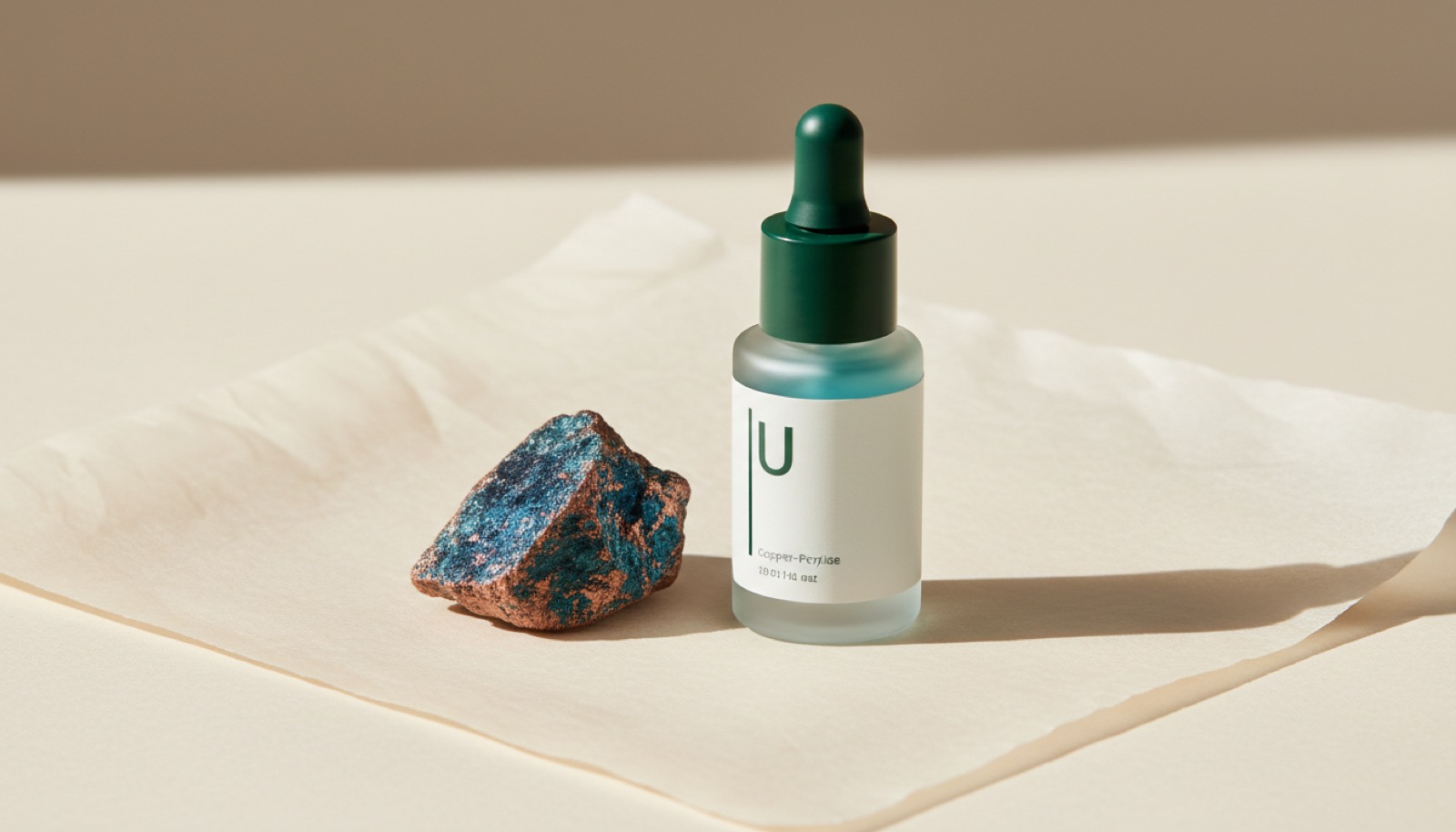
Welche Vorteile von GHK-Cu durch randomisierte Daten am Menschen gestützt sind und welche aus Zell- und Tierversuchen extrapoliert werden: starke topische Haut- und Haar-Daten, schwache injizierbare Daten und warum diese Trennung entscheidend ist.
Mechanism explainers on PepVise aim for textbook-level clarity without the textbook's refusal to commit to a reading.
What readers ask us next.
- Welche Vorteile von GHK-Cu sind am besten belegt?
- Am besten belegt sind die topischen kosmetischen Wirkungen auf die Haut. Kleine randomisierte und kontrollierte Studien an topischen GHK-Cu-Formulierungen berichten über eine verbesserte Hautfestigkeit, reduzierte feine Linien und eine bessere Hautdichte. Diese Daten betreffen Cremes und Seren, die auf die Haut aufgetragen werden, nicht injizierbare Präparate.
- Wirkt GHK-Cu gegen Haarausfall?
- Die Haar-Evidenz ist schwächer als die Haut-Evidenz, aber nicht null. Kupferpeptide werden in einigen kleinen Studien und Formulierungen mit einer verbesserten Haarfollikel-Umgebung und Haardichte in Verbindung gebracht, meist als topische Anwendung und oft in Kombinationsprodukten, was die Zuordnung des Effekts allein zu GHK-Cu erschwert. Es ist ein plausibles, aber weniger fest etabliertes Anwendungsgebiet als die Hautpflege.
- Sind die injizierbaren GHK-Cu-Vorteile belegt?
- Nein, nicht am Menschen. Die für Wundheilung, Geweberegeneration und Anti-Aging beworbenen systemischen Vorteile beruhen weitgehend auf Zellkultur- und Tierversuchen. Es fehlen kontrollierte Studien am Menschen zu injizierbarem GHK-Cu. Die belastbaren Humandaten betreffen die topische Anwendung; alles andere ist Extrapolation.
References cited on this page.
PubMed, ClinicalTrials.gov, and FDA documents only. Secondary sources appear when needed to characterize public discourse, never as a source for a clinical claim.
- [01]Pickart L, Margolina A. Regenerative and protective actions of the GHK-Cu peptide: review indexing the skin and hair literature. Int J Mol Sci 2018;19(7):1987 (open access; read critically, Pickart described the molecule)
- [02]Pickart L, Vasquez-Soltero JM, Margolina A. GHK peptide as a natural modulator of multiple cellular pathways in skin regeneration. Biomed Res Int 2015;2015:648108
- [03]Badenhorst T, Svirskis D, Wu Z. Physicochemical characterization and stability of the copper-binding tripeptide GHK-Cu (preclinical and formulation context). Pharm Dev Technol 2016
- [04]ClinicalTrials.gov, 'GHK-Cu' and 'copper tripeptide' listings
About The Pepvise Editorial Team
The Pepvise Editorial Team is a small group of researchers and science writers reading the peer-reviewed peptide literature and translating it into calm, cited analysis. We do not sell peptides, recommend peptides, or tell readers what to administer. We describe what has been measured, by whom, at what scale, with what effect size.
Compound reviews are signed off by Dr. Priya Narang, MD, MPH (endocrinologist) and Dr. Marcus Haley, PharmD, BCPS (board-certified clinical pharmacist). Both hold verifiable state-board licenses and have signed editorial-independence letters with us. See the full editorial board →
Adjacent in the literature.
BPC-157, What the Evidence Shows
Evidence Ledger for BPC-157: 50+ preclinical studies, 1 human pilot (Chang 2014, n=12), 1 active Phase trial, FDA removed from 503A list in 2023.
16 min readCompounds · Compound profileTB-500, The Field Guide
TB-500 vs Thymosin Beta-4 (same compound), mechanism, the preclinical tendon and recovery literature, and where the human data is thin.
14 min readCompounds · Compound profileGHK-Cu, Evidence and Hype
Copper peptide signaling, the topical RCT evidence for hair and skin, and the gap between topical and injectable claims.
13 min readGet the 2026 Peptide Evidence Ledger.
A 12-page PDF summary of where 10 major compounds sit, Preclinical / Human pilot / Phase trial / FDA status. Updated quarterly. Free.
By subscribing, you agree to our Privacy Policy. One calm, cited email a week. Unsubscribe anytime.